
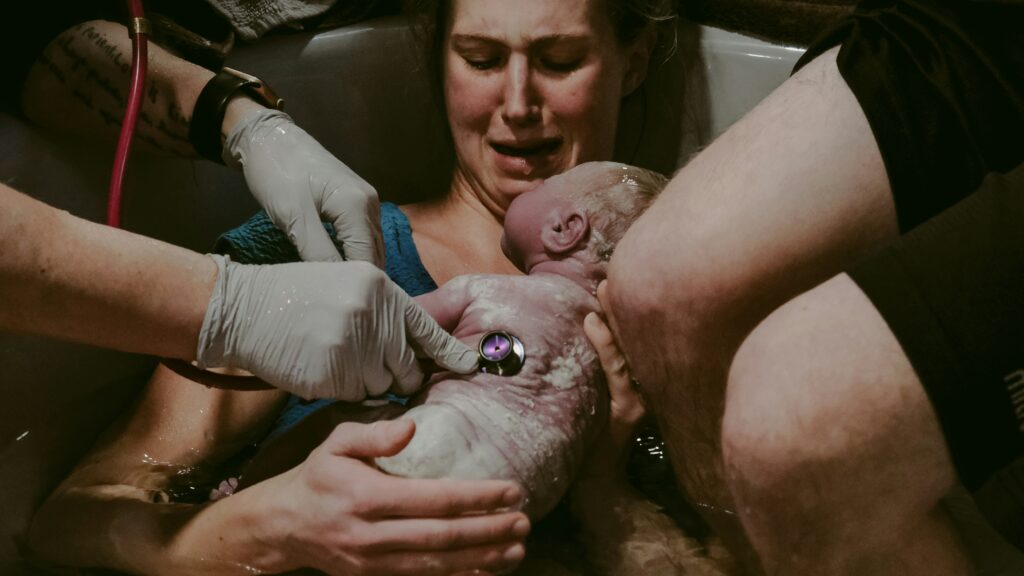
Suddenly, Everything Changed
We didn’t see it coming. One moment, we were prepping for a birth that was supposed to be weeks away. The next, we were speeding into an emergency delivery, our plans left in the dust. When you hear the word “premature,” it hits differently when it’s your baby. The sterile white walls of the NICU replaced the cozy nursery we hadn’t even finished, and nothing felt familiar anymore.
Walking into that space for the first time is a punch to the chest. The beeping machines, the tiny size of your child, the wires, the tubes all of it dissolves whatever image you had of those first moments as a parent. Instead of holding your baby skin to skin, you’re pressing your hand gently through a porthole in an incubator, hoping they can feel you.
No one really warns you about the first 24 hours. How you’re split in two grieving the birth experience you didn’t get, and trying to hold it together for the intense, clinical, high stakes start to your baby’s life. There’s fear, yes. But there’s also awe: how something so small can fight so hard.
That day changed everything. And we had no idea how long the road ahead would be or what it would teach us.
Life Inside the NICU
Walking into the NICU for the first time is overwhelming bright lights, beeping monitors, incubators lined in rows. What begins as a place of worry slowly becomes a second home, one filled with unfamiliar routines that eventually offer stability.
A New Kind of Daily Routine
Life in the NICU is rooted in repetition, but that predictability brings comfort:
Tubes and wires: It’s hard at first to see your baby surrounded by so much equipment, but you soon understand what each line does.
Alarms everywhere: At first, every beep is terrifying. Eventually, you learn which ones matter most and when to stay calm.
Medical rounds: Each morning, a group of doctors and nurses gather at your baby’s bedside. Making sense of their updates becomes part of your rhythm.
Endless waiting: So much of NICU life is about patience and trust waiting for weight gains, for breathing to stabilize, for milestones to be met.
Learning the Language of Care
The medical terms come swiftly and without pause:
CPAPs, NG tubes, oxygen levels at first, it all sounds like jargon.
But quickly, you become fluent in the terms that define your baby’s progress.
You start asking more informed questions and advocating more confidently.
Finding Strength in Small Wins
Celebrations in the NICU look different but they’re incredibly powerful:
A successful feeding
A day without alarms
Graduating from one type of bed to another
These milestones, no matter how small, become lifelines moments that remind you the arc of progress is real, even if it’s slow and uneven.
The Humans Behind the Machines
What we didn’t expect was how deeply we’d come to rely on the staff around us:
Nurses who noticed every subtle change and translated medical data into reassurance
Respiratory therapists who explained each adjustment
Doctors and specialists who gave as much time and compassion as clinical updates
These professionals became a crucial part of our NICU experience not just caring for our baby, but often for us as well.
The Mental Load

Hope is not a steady flame in the NICU. Some days, it flickers. Other days, it burns too bright and crashes by nightfall. Every beep, test result, or unexpected update pulls you in new emotional directions. There’s a relentless balancing act clinging to progress while bracing for setbacks. I lived in that limbo, measuring time by feed volumes and oxygen levels instead of hours and days.
What kept me standing wasn’t some grand, heroic mindset. It was small, repeatable things. Journaling helped sort the noise in my head. I didn’t write to be wise I wrote to breathe. Therapy grounded me when fear became fatigue. We leaned on people who showed up without asking for updates. A text, a food drop off, a moment of normal conversation those things made it possible to get through the next hour, let alone the day.
Emotional exhaustion is real, and pretending otherwise only made the weight worse. Naming it, admitting I wasn’t okay every minute, mattered. It gave me space to rest between battles, space to notice the beauty in a stable vitals chart or a nurse’s quiet encouragement.
The mental load will crack you if you don’t find small ways to release pressure. Don’t wait for a breaking point.
The Long Awaited Homecoming
No one gives you a countdown clock in the NICU. Instead, you start to notice little milestones. Less equipment. More feedings by bottle or breast. Steady weight gain. Your baby finally passes the car seat test. One by one, the medical boxes get checked off. Then there’s a talk with the care team serious, but warm that lets you know: it’s almost time.
Getting ready wasn’t just about stocking diapers and burp cloths. We cleared space in our apartment for oxygen tanks and an apnea monitor. We learned how to work a suction machine. We made binders with contact numbers and feeding charts. It wasn’t a Pinterest nursery it was practical. There were checklists, labels, whiteboards. We were building a system for survival, not style.
The shift hit hard once we got home. For weeks, a squad of trained professionals had been tracking our baby’s every breath. Now it was just us. Nights felt long and quiet in a different way. I remember sitting next to the crib, not sleeping, just watching. We were technically out of the woods, but the fear didn’t exactly pack up and leave.
The biggest surprise? How fast we adapted. Our baby still had health needs, but the setting changed everything. We weren’t just surviving we were starting to become a family, on our terms. The medical gear didn’t disappear, but it stopped feeling like hospital baggage. It was just part of the furniture.
For a related story that’s both raw and encouraging, check out this mom’s NICU to home journey.
What I Wish I Knew
Advocating for your baby in the NICU is like learning a language no one prepares you for. The stakes feel high, the rooms feel clinical, and sometimes the doctors sound like they’re speaking in code. Ask anyway. Speak up even if you’re unsure. NICU teams are experts in medicine, but you’re the expert on your child. You’ll quickly learn how to ask the right questions and when something doesn’t feel right. Trust that instinct. It matters.
There will be days you feel terrified, overwhelmed, wrecked. That doesn’t mean you’re doing it wrong. It means you’re in the middle of something impossibly hard and still finding a way to show up. You’re allowed to fall apart. You’re allowed to be strong and scared in the same hour.
And while it sounds like a stretch, try not to lose sight of the bigger circle your partner, your other kids, yourself. This experience tests every part of your life. Check in. Make time to debrief with each other. Let people help when they offer. It isn’t about doing everything it’s about surviving with your core intact. Small rituals, like walking outside for five minutes or sharing quiet updates with your toddler, can stitch those frayed edges back together.
You don’t have to be perfect. You just have to keep showing up for your baby, and for yourself, as best you can that day.
Standing on the Other Side
Now that we’re home, with some space and time between us and the NICU days, the whirlwind has started to settle. Looking back, there’s no denying it changed us how we see parenting, how we hold each other up, how we take nothing for granted. There’s gratitude, but also a quiet strength that came from surviving something so uncertain. Every check up, every little milestone it feels earned.
Community played a big part in that. We found it in the other NICU parents who nodded knowingly across the incubators, and later, in online spaces where stories mirrored our own. When no one in your immediate circle quite understands what 3 a.m. anxiety feels like with a monitor beeping in the background, these connections matter. They don’t fix everything, but they remind you you’re not alone.
That’s why we’re sharing our story not because it’s rare, but because it happens quietly to so many families. If it gives someone even a sliver of hope during a long hospital night, or helps a new parent feel just 5% less scared, then it’s worth it. The NICU taught us about fragility, but also resilience. And now, we carry both.
(Also worth reading: nicu to home story)
 Reginalita Leeons played a vital role in building the supportive environment that Motherhood Tales Pro is known for. With a strong background in wellness and outreach, she guided the development of resources that address the holistic needs of mothers. Her compassionate input ensured that every offering—from blog posts to wellness tools—felt thoughtful, inclusive, and empowering.